Friday, June 11, 2010

Looking for Government Data?


Quantitative social scientific information plays an increasingly important role in both litigation and legal scholarship. As a result, it is often necessary to be able to cite to statistics and datasets as part of your legal research but identifying sources of such data can be tricky, especially when it relates to foreign or international statistics.

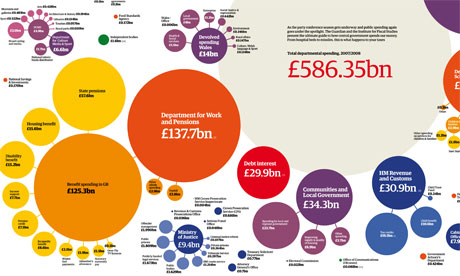
In response to the growing interest in and need for statistical information in many fields, the Guardian newspaper has created a blog and online directory to the all data sources that they use in producing statistics for their news stories.

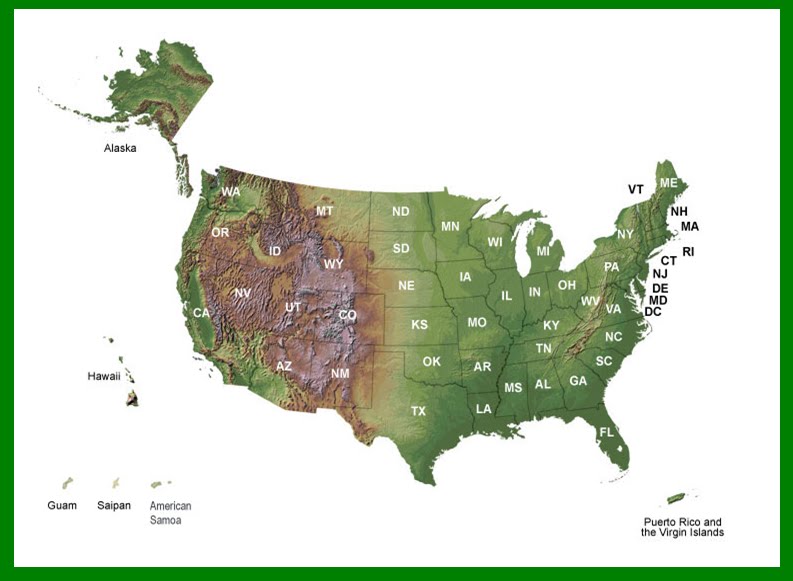
The database can be searched using keywords or browsed by country or topic. There is also a page devoted to US data, including information related to health insurance, war and the environment.

Wednesday, June 9, 2010

International Criminal Court Review

Established eight years ago, the International Criminal Court (ICC) is the first permanent, treaty based, international criminal court established to try perpetrators of the most serious crimes of concern to the international community.

The Rome Statute -- the treaty that set up the court -- was adopted by 120 countries in 1998. At that time, 7 countries voted against the Statute: China, Iraq, Israel, Libya, Qatar, the United States, and Yemen. Human Rights Watch page. The Rome Statute entered into force July 1, 2002, after it was ratified by 60 countries.

Now, eight years later, the number of states parties has nearly doubled, to 111 countries. They are holding a review conference in Kampala, Uganda, to take stock. The conference began on May 31 and continues until June 11. For more, see the American Society of International Law's ICC Review Conference Resources.

The U.S. objections to the ICC are summarized in U.S. Policy Regarding the International Criminal Court, a Congressional Research Service Report (updated Aug. 29, 2006). For very current US comments, see the Statement at the Review Conference of the International Criminal Court by Harold Hongju Koh, Dept. of State Legal Adviser, June 4, 2010.

Monday, June 7, 2010

Library Hours Change after Friday, June 11

When Law School exams end this Friday, June 11, the Law Library moves to its interim schedule:

Sat - Tue, June 12 - 15: Closed
Wed - Fri, June 16 - 18: 8am - 5pm
Sat & Sun, June 19 & 20: Closed

The Reference Office is open Wed - Fri from 9am - noon and 1 - 5pm

When Law School summer classes begin on June 21, the Law Library moves to its summer schedule:

Mon - Wed: 8am - 7pm
Thu & Fri: 8am - 5pm
Sat: Closed
Sun: 12pm - 5pm (typo corrected 6/18/10)

The Reference Office is open Mon - Fri from 9am - 5pm and Sunday from 1 - 4pm.

The Library will also be closed on Sunday & Monday, July 4 & 5, in observance of the Independence Day holiday.

Guide to Adjusting Your Facebook Privacy Settings


The Electronic Freedom Foundation has issued step-by-step instructions on How to Get More Privacy from Facebook's New Privacy Settings.
This is important because you must take affirmative steps to adjust your settings in order to take full advantage of the revised privacy practices. While some information, such as your name, profile picture and gender, will remain publicly available, these steps are designed to provide as much privacy as Facebook's new system allows.

Saturday, June 5, 2010

Thursday, June 3, 2010

Proposed Rule on Airline Passenger Rights

Traveling this summer by air? Worried about being bumped or sitting in the airplane on the tarmac in the hot sun during a delay? The Department of Transportation has a new proposed rule that seeks to "improve the air travel environment for consumers...." This document includes a link to the Federal eRulemaking Portal that permits you to submit an official comment to the agency about the proposed changes.

But, would you perhaps prefer a shorter summary of the proposed changes and a more "Web 2.0" way to comment?

Cornell Law School's Legal Information Institute also covers the proposed changes in its Regulation Room, part of the Cornell eRulemaking Iniative (CeRI). The CeRI is

a pilot project that provides an online environment for people and groups to learn about, discuss, and react to selected rules(regulations) proposed by federal agencies. It expands the types of public input available to agencies in the rulemaking process, while serving as a teaching and research platform.

When you visit the site, note on the left the Rule Dashboard, which lists and summarizes the proposed changes in the official proposed rule. You can vote on which changes are important to you, and submit your own comments. The comments are then summarized by the moderators of the site (a team of faculty and students working on a particular rule) and submitted to the agency.

So, if air travel is in your future, consider taking this opportunity to tell the Department of Transportation what consumer protections you think should be implemented!

Tuesday, June 1, 2010

CSI New York -- in the 1920s and '30s!


In The Poisoner's Handbook, Deborah Blum tells the human and scientific stories of poison and investigation in the 1920s and 1930s, focusing on New York City and two crusading scientists: Charles Norris, the city's first medical examiner, and Alexander Gettler, the head chemist in the ME's office.


This work mixes a couple of nonfiction genres: true crime and popular science. A couple is found dead: accident or murder? Several family members die: all victims of disease or were they poisoned? It takes pretty sophisticated science to tell -- science that Norris and Gettler had to develop as they went along.

There's also some interesting social history. In addition to working on individual crimes, the scientists advocated (not always successfully) for public health measures -- workplace safety, a stronger FDA (able to ban, for instance, "medicines" with radium), and an end to Prohibition-era poisoning of alcohol (see Blum's account in Slate).


Deborah Blum, The Poisoner's Handbook: Murder and the Birth of Forensic Medicine in Jazz Age New York (HV6555.U62 N373 2010 at Good Reads). Publisher's page.

New Music Video Sensation: Librarians!

Even if finals have you too busy to go to the Seattle International Film Festival, you can still check out this winner from the UW Information School's iSight Film Festival.


The video has been noticed by KING5 and MSNBC. It's got a good message, too.

Thanks to Kaden Mack and Nick Marritz, who both sent the link.

Sunday, May 30, 2010

New Faculty Publication: William Andersen on U.S. Administrative Law


William R. Andersen, Fundamentals of U.S. Administrative Law, in Overview of United States Law 355 (Ellen S. Podgor & John F. Cooper, eds., 2009). Located at KF385 .P58 2009, Reference Area.


Professor Andersen's chapter begins with an examination of how the administrative process fits into the U.S. constitutional structure. Additional topics covered include adjudication, rulemaking and the availability and scope of judicial review of agency action.

-- Tim Galina

Monday, May 24, 2010

New Faculty Publication: Anita Ramasastry on Odious Debt

Anita Ramasastry, Odious Debt or Odious Payments? Using Anti-corruption Measures to Prevent Odious Debt, in Rule of Law Promotion: global perspectives, local applications 359 (Per Bergling, Jenny Ederlof & Veronica L. Taylor, eds., 2009). Located at K3171 . R85 2009, Classified stacks.


Professor Ramasastry's article examines illicit financial flows to and from countries in transition and examines anti-corruption strategies designed either to prevent odious debt in the first place or to prevent capital flight.

New Faculty Publication: Veronica Taylor on the Rule of Law Bazaar


Veronica L. Taylor, The Rule of Law Bazaar, in Rule of Law Promotion: global perspectives, local applications 325 (Per Bergling, Jenny Ederlof & Veronica L. Taylor, eds., 2009). Located at K3171 .R85 2009, Classified stacks.

Professor Taylor assesses institutional design issues in rule of law scholarship and calls for more inquiry and research to address the structural problems of donor-assisted rule of law initiatives. Professor Taylor concludes, "We know that the world is littered with failed legal reform projects. One consequence is that failed rule of law projects--or those that fail to deliver on their advertised promises-- have costs." (p. 357)


Three New Gov't Reports on Climate Change

The National Research Council has issued three new publications on climate change:


Adapting to the Impacts of Climate Change

The report calls for a national adaptation strategy to support and coordinate decentralized efforts. As part of this strategy, the federal government should provide technical and scientific resources that are currently lacking at the local or regional scale, incentives for local and state authorities to begin adaptation planning, guidance across jurisdictions, shared lessons learned, and support of scientific research to expand knowledge of impacts and adaptation.


Advancing the Science of Climate Change
The report recommends that a single federal entity or program be given the authority and resources to coordinate a national research effort integrated across many disciplines and aimed at improving both understanding and responses to climate change. The U.S. Global Change Research Program, established in 1990, could fulfill this role, but it would need to form partnerships with action-oriented programs and address weaknesses in its current program. A comprehensive climate observing system, improved climate models and other analytical tools, investment in human capital, and better linkages between research and decision making are also essential to a complete understanding of climate change.


Limiting the Magnitude of Future Climate Change
The report concludes that a carbon pricing system (either cap-and-trade, taxes, or a combination of the two) is the most important step for providing needed incentives to reduce emissions. There is also a need, however, for complementary policies aimed at ensuring rapid progress to: increase energy efficiency; accelerate the development of renewable energy sources; advance full-scale demonstration of nuclear power and carbon capture and storage systems; and retrofit or replace existing emissions-intensive energy infrastructure. Research and development of new technologies that could help reduce emissions further in the long term also should be strongly supported.

Friday, May 21, 2010

New Faculty Publication: Kate O'Neill on Covenants Not to Compete

Kate O'Neill, Should I Stay or Should I Go?--Covenants Not to Compete in a Down Economy: A Proposal for Better Advocacy and Better Judicial Opinions, 6 Hastings Bus. L. J. 83-144 (2010).


Employers often require new employees to sign an agreement not to compete as a condition of their job offer. But what happens when the employee needs to leave a position and cannot find a new position that doesn't violate the covenant not to compete? The answer is unpredictable. Professor O'Neill proposes, in part 1, a four-factor rationale for determining "the contractual significance of an employee's assent" to one of these covenants. Part 2 examines and summarizes regulation of these covenants in the 50 states. Part 3 provides a detailed analysis of an employee's case in Washington state and applies the proposal to the facts of that case.

New Faculty Publication: Jon Eddy on the Rule of Law in Afghanistan


Over the past nine years, the United States has channeled vast sums of money to projects aimed at developing frameworks for establishing the rule of law in Afghanistan - but what does the rule of law actually mean? And how effective are these projects in achieving their goals?
Drawing on over thirty years of experience working in the field of law and development, Prof. Eddy explores "the disconnect between Rule of Law discourse and the actualities of the Afghan context". He urges the U.S. donor community to adopt not only more modest goals, but also a "more patient attitude towards the evolution of the Afghan legal system".

New Faculty Publication: Craig Allen on Narrow Channel Collision Prevention

Craig H. Allen, Taking Narrow Channel Collision Prevention Seriously to More Effectively Manage Marine Transportation System Risk, 41 J. Mar. L. & Com. 1-56 (2010).

What is the definition of a "narrow channel?" Mariners are obligated to follow unique collision-avoidance "rules of the road" when navigating increasingly-crowded narrow channels in U.S. waters. But when mariners don't have enough guidance on what the rules mean, the operators of different vessels may assess a potential collision differently or make "collision avoidance maneuvers" a bit too late.

Professor Allen provides possible approaches to making the rules more clear for mariners. One approach has the Coast Guard making designations through formal (and time-consuming) administrative rulemaking procedures; the quicker approach may be to look at prior narrow channel designations and propose a way to identify unlisted waterways as narrow channels.

New Faculty Publication: Maureen Howard on Female Advocates' Attire

How should women dress when they appear in court for their clients? Conventional wisdom suggests conservatively: a sober suit with a respectable blouse. But Professor Maureen Howard, Director of the UW's Trial Advocacy Program, suggests that effective advocates need to be credible, and that might mean dressing to reflect one's own personality and tastes.

The biggest risk of adopting "off the rack" clothing advice is ignoring one's own sense of personal authenticity in dress and manner. In such a situation, the clothing "becomes a "costume," undermining the lawyer's credibility and emphasizing the "play within a play" aspect of trial work. . . . A lawyer who maintains her integrity in her dress and emeanor and is consistently genuine -- consistently herself -- is more likely to be perceived as credible and trustworthy.
Maureen A. Howard, Beyond a Reasonable Doubt: One Size Does Not Fit All When It Comes to Courtroom Attire for Women, 45 Gonz. L. Rev. 209, 216 (2009/10), LexisNexis get 45 gonz l rev 209, Westlaw
Find 45 gonz l rev 209. Howard supports her argument with observations from her experience as well as citations to practice guides and scholarly literature.

New Faculty Publication: Kathryn Watts on Justice Stevens and Securing the Public Interest


Kathryn A. Watts, From Chevron to Massachusetts: Justice Stevens's Approach to Securing the Public Interest, 43 U.C. Davis L. Rev. 1021-62 (2010).


This article analyzes two significant administrative law decisions authored by Justice Stevens: Chevron U.S.A. Inc. v. Natural Resources Defense Council, Inc. 467 U.S. 837 (1984) and Massachusetts v. EPA 549 U.S. 497(2007). Both cases involved the EPA and the Clean Air Act but seemed "to send very different messages about the judiciary's policing function." Nevertheless, Professor Watts, former Law Clerk to Justice Stevens, concludes that Justice Stevens emerges as a "strong adherent of purposivism," enabling him to give agencies leeway when their actions further Congress's goals while checking them when their actions thwart those same goals.

Librarian Publication: Subject Compilations of State Laws

What would you do if you had to find all the state laws on animal cruelty? Or foreclosure mediation programs? Or sex education in public schools?


You could start looking them up, one by one: Alabama, Alaska, Arizona, . . . But wouldn't it be great if someone else had already done the heavy lifting?

Surveys of state laws can show up in a variety of places: e.g., law review articles, websites of advocacy groups, briefs, treatises. The trick is finding them.

And here's where reference librarian Cheryl Nyberg makes life easier for you (and other legal researchers around the country). She scans thousands of sources, looking for the footnotes and charts that compare state laws on different topics, then she cites them in an organized list so that you can find them and use them.

The latest volume in her series -- which she's been producing since 1984 -- is Subject Compilations of State Laws 2008-2009: An Annotated Bibliography (KF1 .S93 2008-09 at Reference Office).

Cool as this series of books is, it's now even better in an electronic format. All of the entries (going back to articles published in 1960) can now be searched on HeinOnline. And if the law review cited is available on HeinOnline, you can link right to it.

This is a great online tool. And it's a good illustration of how the best electronic tools take advantage of an intelligent person's work, searching for information, evaluating it, annotating it, and organizing it -- all to make your research more efficient.

Thursday, May 20, 2010

EFF's FOIA Documents Archive

The Electronic Frontier Foundation (EFF) reports in its blog that it has added thousands of never-before-seen records to its online collection of documents obtained through the Freedom of Information Act (FOIA).

This cache of government records, along with the rest of EFF’s FOIA repository, can be searched using EFF’s FOIA document search tool.

The result of almost 200 FOIA requests and over a dozen lawsuits, the repository now includes:
  • documents detailing the Federal Communications Commission’s claimed authority to conduct warrantless searches of private residences;
  • tens of thousands of pages of records describing the FBI’s misuse of its authority to issue National Security Letters;
  • a summary of complaints to the of Homeland Security’s Traveler Redress Inquiry Program (TRIP);
  • a description of the Department of Homeland Security’s role in the Comprehensive National Cybersecurity Initiative;
  • a set of government contracts with Google and other technology firms for the digitization of government files;
  • documents related to the FBI’s capacity to conduct surveillance on Skype, the internet telephony protocol; and
  • copies of the National Science Foundation’s grant awards for wireless microelectromechanical sensor technology, so-called “smart dust".
Hat tip to Gary Price's Resource Shelf for bringing this to our attention!

Wednesday, May 19, 2010

New Faculty Publication: Craig Allen on Cargoes of Doom


Craig H. Allen, Cargoes of Doom: National Strategies of the U.S. to Combat the Illicit Transport of Weapons of Mass Destruction by Sea, in The Oceans in the Nuclear Age; Legacies and Risks 295 (2010).

Professor Allen's chapter describes established legal and strategic programs for combating terrorism and weapons of mass destruction and providing for homeland, maritime, and national security. Given that threats to America's security may come from unfriendly nations, rogue regimes, non-state organizations, and crime syndicates, the United States has joined other nations in developing multilateral counter-proliferation strategies, with a focus on the role of the maritime sector.

The Proliferation Security Initiative (PSI) is a major element in this effort.
Elements of the PSI include strengthened export control and trade inspections; sharing of information on suspected shipments, shippers, consignees and carriers; and increased searches of vessels, planes, and vehicles.
Multilateral exercises, interdictions, and meetings of experts further the Initiative's progress and improvement. Despite criticism from some and acknowledging that it is not a comprehensive answer to the problem, "the PSI has the potential to measurably enhance the effectiveness of counter-proliferation enforcement system."

Thursday, May 13, 2010

New Faculty Publication: Greg Hicks on Tensions in Water Law


Gregory A. Hicks, Acequias of the South-Western US in Tension with State Water Laws, in Out of the Mainstream: Water Rights, Politics and Identity 223-34 (Rutgerd Boelens, David Getches & Armando Guevara Gil eds., Earthscan Publications 2010).

Professor Hicks' chapter addresses:

the history of the problematic relationship between state-centered
governance of water in Colorado and New Mexico, US, and the historic Hispano irrigation institutions that have operated there since before the area became part of the US. This history has much to say about the complex relationship between local cultures of water and the imperatives of state-centered agendas for the use and allocation of water.


A centuries-old tradition of community regulation of water flow for irrigation, the acequia reinforced mutual commitments and water allocation based on need. With Western settlement came the imposition of prior appropriation, "which allocates water priority in conditions of scarcity to the first-in-time beneficial users."

New Mexico acknowledged acequia rights; Colorado did not.

Professor Hicks reviews related historical and legal developments and their implications.

The Law Library copy of this book is in the Classified Stacks at HD1691.O98 2010.

New Faculty Publication: Robert Anderson's American Indian Law Casebook


Robert T. Anderson, Bethany Berger, Philp P. Frickey & Sarah Krakoff, American Indian Law: Cases and Commentary (2d ed. West 2010) (American Casebook Series)

This new edition of Prof. Anderson's casebook incorporates important recent cases and a new seaction on the law regulating Indian gaming.

The preface states:

This casebook is designed to provide an introduction to the history and modern principles of federal law relating to Indian tribes in the United States.

Chapters cover:
  1. Introduction: American Indian Law and American Indian Nations and People
  2. Origins of Federal Indian Law
  3. Experiments in Federal Indian Policy
  4. Federal Power in Indian Affairs: Scope, Sources and Limitations
  5. Tribes, Indian Country and Criminal Jurisdiction
  6. Tribal Sovereignty
  7. State-Tribal Struggles over Jurisdiction
  8. Tribal Jurisdiction over Non-Members
  9. Natural Resources, Hunting, Fishing and Gathering Rights
  10. Water Rights
  11. American Indian Religion and Culture
  12. Alaska and Hawai'i
  13. Indigenous Peoples' Rights in International and Comparative Contexts
  14. Epilogue: Perspectives on American Indian Law

The first edition of the casebook was published in 2008.

Monday, May 10, 2010

New Supreme Court Nominee: Elena Kagan

This morning President Obama nominated Elena Kagan, the current Solicitor General, to fill Justice Stevens' seat on the U.S. Supreme Court.

The New York Times has gathered statements by Ms. Kagan on a number of topics, including
  • abortion
  • constitutional theory
  • the death penalty
  • don't ask, don't tell
  • judicial activism
  • the Second Amendment

and other topics.

The Senate Judiciary Committee hearing on her nomination as Solicitor General is available online.

For more information about Ms. Kagan and reactions to her nomination, see the Gallagher guide on Supreme Court Nominations--Recent Nominees.

Wednesday, May 5, 2010

Helpful Advice for Using the Library

Here is some helpful advice from Arizona State University:


Your stuff is just as vulnerable here as it would be in the libraries in Tempe. Keep an eye on it!

Monday, May 3, 2010

US Food Policy and Obesity Legislation Database

Yale University's Rudd Center for Food Policy and Obesity has launched an online database that monitors federal and state legislation related food policy and obesity.

In addition to bill updates and bill tracking, there is a link to congressional lobbying that allows you to see who is lobbying for what and how much they are spending on it, too.

You can search by client, such as the Coca-Cola Corporation or General Mills, or you can identify bills by a particular issue and then click on the link provided to see the congressional lobbying related to that bill.

Although it only goes back until 2009, this database is updated regularly.