Monday, June 28, 2010

Howard on Prosecutors' Peremptory Challenges

Professor Maureen A. Howard tackles the use of peremptory challenges in criminal cases. Taking the High Road: Why Prosecutors Should Voluntarily Waive Peremptory Challenges, 23 Geo. J. Legal Ethics 369 (2010), available on LexisNexis, Westlaw.

Using published studies and her own trial experience, Professor Howard questions the usefulness of peremptory challenges.

She moves on to explore the costs of their use: limiting the breadth of community participation and increasing the public's perception that lawyers are manipulating the system. She argues that prosecutors should voluntarily waive their right to use peremptory challenges.

Responding to potential concerns that giving up peremptory challenges would allow biased jurors to serve, Professor Howard says that the solution would be "a broader definition and application of a challenge for cause, not necessarily retention of the current peremptory challenge practice." (p. 415)

She concludes:
The use of peremptory challneges has questionable value and risks violating the constitutional rights of both defendants and prospective jurors. . . . Instead of waiting for judges and legislators to respond to the decades of criticism levied at the use of peremptory challenges and the narrow definition and application of for-cause challenges, the prosecutor should 'take the high road' and waive peremptories.

Andersen on Electing Judges

Unlike federal judges, who are appointed by the President with the advice and consent of the Senate, our state judges are elected by the people. But in practice, most of them are first appointed by the governor to fill mid-term vacancies and only face election if they are opposed at the end of their terms. There is very little public scrutiny of the appointment process, and when elections roll around, many voters don't have good tools for evaluating candidates. Professor William R. Andersen turns his attention to these issues in Judicial Selection in Washington -- Taking Elections Seriously, 33 Seattle U. L. Rev. 605 (2010), available on HeinOnline, LexisNexis, Westlaw.

Professor Andersen suggests that some problems cannot be fixed within the framework of our election system, but some can.

Some may decry big-money campaigns for judgeships, but Supreme Court precedent limits what can be done. And if there are to be elections, then judges will have to participate in campaigning -- raising money, giving speeches, and so on. To address problems resulting from this aspect of electing judges, Professor Andersen recommends revising the rules for recusal, and he says that "serious work is going on in professional bodies to make necessary revisions." (p. 609)

To make selection of judges more informed and transparent, Andersen urges "a broad-based and intentionally diverse citizen's commission charged with evaluating judicial candidates." (p. 614)

He also suggests regular, objective performance evaluations of judges, and he reports that systems for evaluating judges are being tried around the country (p. 612), citing the National Center for State Courts page on Judicial Performance Evaluation, which links to information from 18 states, including Washington. (By the way, the NCSC link is broken for Washington State's Walsh Commission Report, The People Shall Judge: Restoring Citizen Control to Judicial Selection (1996), but this link works. Prof. Andersen was a member of the Walsh Commission.)

Stuart Scheingold, Scholar of Law and Politics


Stuart Scheingold, professor emeritus of political science and a leading scholar of law and politics, has died. Obituary: UW professor renowned for work on law, politics, Seattle Times, June 28, 2010.

"He was quite simply one of the world's leading commentators on law and politics," said Amherst College's Austin Sarat, a professor of jurisprudence and political science with whom Professor Scheingold directed the multivolume, internationally oriented Cause Lawyering Project.

Scheingold's works include:

For more -- including many works on European integration -- see this list on WorldCat.

Prof. Scheingold's faculty profile is here. In his honor, the Department of Political Science has the Stuart A. Scheingold Professorship of Social Justice (now held by Christopher Parker).
Photo from Seattle Times.

Dataset of Questions Asked & Answered of SCOTUS Nominees

Lori A. Ringhand (UGa) and Paul M. Collins, Jr. (U N Texas) have compiled a dataset of the questions asked by members of the Senate Judiciary Committee of nominees to the U.S. Supreme Court since 1939.

Their paper, May it Please the Senate: An Empirical Analysis of the Senate Judiciary Committee Hearings of Supreme Court Nominees, 1939-2009, investigates "if questioning patterns differ depending on the race or gender of the nominee" and finds that "the Bork hearing is less of an outlier in several ways than is frequently assumed, and [that] abortion has not dominated the hearings."

The authors also discover "notable disparities in the issues addressed by Democratic versus Republican senators" and "that female and minority nominees face a significantly different hearing environment than do white male nominees."

Wednesday, June 23, 2010

Attorney and Client Decision Making Probed

When attorneys and their clients decide whether to settle and for how much, they try to predict how things will turn out if they go to trial, hoping, of course, to do better. In a study of thousands of civil cases, researchers found that attorneys were very often wrong. Three-fifths of plaintiffs and a quarter of defendants got a result at trial that was worse than the settlement they could have had. The cost of the error was much greater for defendants: plaintiffs' average error was $43,100, but defendants' average error was $1,140,000. Randall L. Kiser, Martin A. Asher, and Blakeley B. McShane, Let’s Not Make a Deal: An Empirical Study of Decision Making in Unsuccessful Settlement Negotiations, 5 J. Empirical Legal Studies 551, 566 ((2008).

Now the lead author of that study -- a consultant and former litigator -- has written a book aimed at lawyers and law students to help them see the problem of bad decision making and learn ways to improve it. Randall Kiser, Beyond Right and Wrong: The Power of Effective Decision Making for Attorneys and Clients, K126.K57 2010 at Classified Stacks. The book presents research studies to support its recommendations. As the author puts it:
This book differs from other books and articles on settlement negotiations in that it places greater weight on scientific evidence than the war stories of attorneys, mediators and judges; it assumes that empirical studies are more instructive than anecdotes and statistics are more dependable than surmise.
p. 5. But Kiser goes easy on his audience by presenting the social science without "probability theory, regression analysis, game theory," and so on "for a simple reason: attorneys generally don't like them, don't understand them and won't use them." So the book is a practical, how-to work backed by scholarship (but not weighed down by it).

It should be of interest for professional responsibility as well as trial practice and alternative dispute resolution.

Law Professor Slams Law Reviews for Impracticality

Professor and former dean Gerald Uelmen laments that law reviews have become less useful to practicing lawyers and judges, contrasting the time several decades ago when judges often turned to law reviews for guidance with today. But he predicts that law reviews won't go away anytime soon, since employers still value law review experience, which does indeed help students' writing skills. Gerald F. Uelmen, The Wit, Wisdom, and Worthlessness of Law Reviews, Cal. Law., June 2010.

Thursday, June 17, 2010

Washington Journal of Law, Technology & Arts

Congratulations to the editors of the Washington Journal of Law, Technology & Arts, which made its debut yesterday.

It begins its life at volume 6, number 1, because it replaces the Shidler Journal of Law, Commerce + Technology as part of a merger with the Law, Technology & Arts Group (LTA) a new interdisciplinary research unit at the law school. LTA was formed in 2009 to take a comprehensive approach to legal issues involved in artistic and technological innovation. LTA consolidates a J.D. concentration, an LL.M. program, the former Shidler Center for Law, Commerce + Technology, and the Center for Advanced Research in Intellectual Property (CASRIP) into a single research team.

The Washington Journal of Law, Technology & Arts publishes concise legal analysis aimed at practicing attorneys. The Journal will publish on a quarterly basis. Check out the new issue, which has articles on:

* Cloud Computing
* Arbitration Clauses in Wireless Telephone Service Contracts
* Cell Phone Text-Message Spam
* Liability for Posting Hyperlinks in Financial Disclosures
* Modifying Contract Through E-Mail
* Attorney-Client Ethical Issues Raised by Gmail

Do you have something to say about law, technology, and the arts? The Journal accepts outside submissions from students, law professors, and practicing attorneys.

Friday, June 11, 2010

Looking for Government Data?


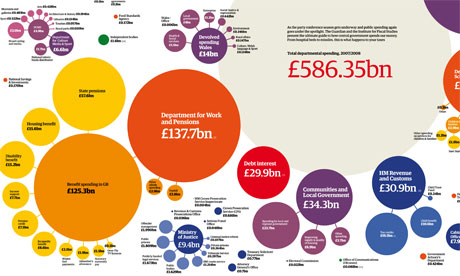
Quantitative social scientific information plays an increasingly important role in both litigation and legal scholarship. As a result, it is often necessary to be able to cite to statistics and datasets as part of your legal research but identifying sources of such data can be tricky, especially when it relates to foreign or international statistics.

In response to the growing interest in and need for statistical information in many fields, the Guardian newspaper has created a blog and online directory to the all data sources that they use in producing statistics for their news stories.

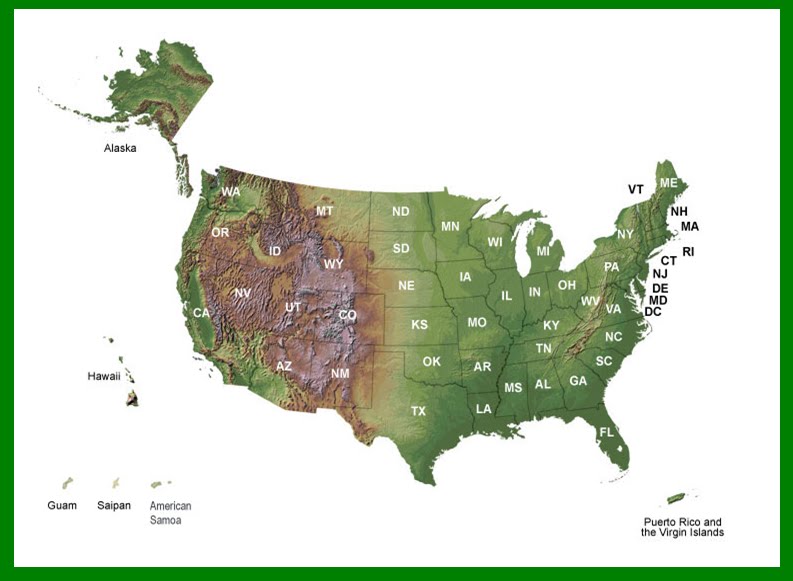
The database can be searched using keywords or browsed by country or topic. There is also a page devoted to US data, including information related to health insurance, war and the environment.

Wednesday, June 9, 2010

International Criminal Court Review

Established eight years ago, the International Criminal Court (ICC) is the first permanent, treaty based, international criminal court established to try perpetrators of the most serious crimes of concern to the international community.

The Rome Statute -- the treaty that set up the court -- was adopted by 120 countries in 1998. At that time, 7 countries voted against the Statute: China, Iraq, Israel, Libya, Qatar, the United States, and Yemen. Human Rights Watch page. The Rome Statute entered into force July 1, 2002, after it was ratified by 60 countries.

Now, eight years later, the number of states parties has nearly doubled, to 111 countries. They are holding a review conference in Kampala, Uganda, to take stock. The conference began on May 31 and continues until June 11. For more, see the American Society of International Law's ICC Review Conference Resources.

The U.S. objections to the ICC are summarized in U.S. Policy Regarding the International Criminal Court, a Congressional Research Service Report (updated Aug. 29, 2006). For very current US comments, see the Statement at the Review Conference of the International Criminal Court by Harold Hongju Koh, Dept. of State Legal Adviser, June 4, 2010.

Monday, June 7, 2010

Library Hours Change after Friday, June 11

When Law School exams end this Friday, June 11, the Law Library moves to its interim schedule:

Sat - Tue, June 12 - 15: Closed
Wed - Fri, June 16 - 18: 8am - 5pm
Sat & Sun, June 19 & 20: Closed

The Reference Office is open Wed - Fri from 9am - noon and 1 - 5pm

When Law School summer classes begin on June 21, the Law Library moves to its summer schedule:

Mon - Wed: 8am - 7pm
Thu & Fri: 8am - 5pm
Sat: Closed
Sun: 12pm - 5pm (typo corrected 6/18/10)

The Reference Office is open Mon - Fri from 9am - 5pm and Sunday from 1 - 4pm.

The Library will also be closed on Sunday & Monday, July 4 & 5, in observance of the Independence Day holiday.

Guide to Adjusting Your Facebook Privacy Settings


The Electronic Freedom Foundation has issued step-by-step instructions on How to Get More Privacy from Facebook's New Privacy Settings.
This is important because you must take affirmative steps to adjust your settings in order to take full advantage of the revised privacy practices. While some information, such as your name, profile picture and gender, will remain publicly available, these steps are designed to provide as much privacy as Facebook's new system allows.

Saturday, June 5, 2010

Thursday, June 3, 2010

Proposed Rule on Airline Passenger Rights

Traveling this summer by air? Worried about being bumped or sitting in the airplane on the tarmac in the hot sun during a delay? The Department of Transportation has a new proposed rule that seeks to "improve the air travel environment for consumers...." This document includes a link to the Federal eRulemaking Portal that permits you to submit an official comment to the agency about the proposed changes.

But, would you perhaps prefer a shorter summary of the proposed changes and a more "Web 2.0" way to comment?

Cornell Law School's Legal Information Institute also covers the proposed changes in its Regulation Room, part of the Cornell eRulemaking Iniative (CeRI). The CeRI is

a pilot project that provides an online environment for people and groups to learn about, discuss, and react to selected rules(regulations) proposed by federal agencies. It expands the types of public input available to agencies in the rulemaking process, while serving as a teaching and research platform.

When you visit the site, note on the left the Rule Dashboard, which lists and summarizes the proposed changes in the official proposed rule. You can vote on which changes are important to you, and submit your own comments. The comments are then summarized by the moderators of the site (a team of faculty and students working on a particular rule) and submitted to the agency.

So, if air travel is in your future, consider taking this opportunity to tell the Department of Transportation what consumer protections you think should be implemented!

Tuesday, June 1, 2010

CSI New York -- in the 1920s and '30s!


In The Poisoner's Handbook, Deborah Blum tells the human and scientific stories of poison and investigation in the 1920s and 1930s, focusing on New York City and two crusading scientists: Charles Norris, the city's first medical examiner, and Alexander Gettler, the head chemist in the ME's office.


This work mixes a couple of nonfiction genres: true crime and popular science. A couple is found dead: accident or murder? Several family members die: all victims of disease or were they poisoned? It takes pretty sophisticated science to tell -- science that Norris and Gettler had to develop as they went along.

There's also some interesting social history. In addition to working on individual crimes, the scientists advocated (not always successfully) for public health measures -- workplace safety, a stronger FDA (able to ban, for instance, "medicines" with radium), and an end to Prohibition-era poisoning of alcohol (see Blum's account in Slate).


Deborah Blum, The Poisoner's Handbook: Murder and the Birth of Forensic Medicine in Jazz Age New York (HV6555.U62 N373 2010 at Good Reads). Publisher's page.

New Music Video Sensation: Librarians!

Even if finals have you too busy to go to the Seattle International Film Festival, you can still check out this winner from the UW Information School's iSight Film Festival.


The video has been noticed by KING5 and MSNBC. It's got a good message, too.

Thanks to Kaden Mack and Nick Marritz, who both sent the link.

Sunday, May 30, 2010

New Faculty Publication: William Andersen on U.S. Administrative Law


William R. Andersen, Fundamentals of U.S. Administrative Law, in Overview of United States Law 355 (Ellen S. Podgor & John F. Cooper, eds., 2009). Located at KF385 .P58 2009, Reference Area.


Professor Andersen's chapter begins with an examination of how the administrative process fits into the U.S. constitutional structure. Additional topics covered include adjudication, rulemaking and the availability and scope of judicial review of agency action.

-- Tim Galina

Monday, May 24, 2010

New Faculty Publication: Anita Ramasastry on Odious Debt

Anita Ramasastry, Odious Debt or Odious Payments? Using Anti-corruption Measures to Prevent Odious Debt, in Rule of Law Promotion: global perspectives, local applications 359 (Per Bergling, Jenny Ederlof & Veronica L. Taylor, eds., 2009). Located at K3171 . R85 2009, Classified stacks.


Professor Ramasastry's article examines illicit financial flows to and from countries in transition and examines anti-corruption strategies designed either to prevent odious debt in the first place or to prevent capital flight.

New Faculty Publication: Veronica Taylor on the Rule of Law Bazaar


Veronica L. Taylor, The Rule of Law Bazaar, in Rule of Law Promotion: global perspectives, local applications 325 (Per Bergling, Jenny Ederlof & Veronica L. Taylor, eds., 2009). Located at K3171 .R85 2009, Classified stacks.

Professor Taylor assesses institutional design issues in rule of law scholarship and calls for more inquiry and research to address the structural problems of donor-assisted rule of law initiatives. Professor Taylor concludes, "We know that the world is littered with failed legal reform projects. One consequence is that failed rule of law projects--or those that fail to deliver on their advertised promises-- have costs." (p. 357)


Three New Gov't Reports on Climate Change

The National Research Council has issued three new publications on climate change:


Adapting to the Impacts of Climate Change

The report calls for a national adaptation strategy to support and coordinate decentralized efforts. As part of this strategy, the federal government should provide technical and scientific resources that are currently lacking at the local or regional scale, incentives for local and state authorities to begin adaptation planning, guidance across jurisdictions, shared lessons learned, and support of scientific research to expand knowledge of impacts and adaptation.


Advancing the Science of Climate Change
The report recommends that a single federal entity or program be given the authority and resources to coordinate a national research effort integrated across many disciplines and aimed at improving both understanding and responses to climate change. The U.S. Global Change Research Program, established in 1990, could fulfill this role, but it would need to form partnerships with action-oriented programs and address weaknesses in its current program. A comprehensive climate observing system, improved climate models and other analytical tools, investment in human capital, and better linkages between research and decision making are also essential to a complete understanding of climate change.


Limiting the Magnitude of Future Climate Change
The report concludes that a carbon pricing system (either cap-and-trade, taxes, or a combination of the two) is the most important step for providing needed incentives to reduce emissions. There is also a need, however, for complementary policies aimed at ensuring rapid progress to: increase energy efficiency; accelerate the development of renewable energy sources; advance full-scale demonstration of nuclear power and carbon capture and storage systems; and retrofit or replace existing emissions-intensive energy infrastructure. Research and development of new technologies that could help reduce emissions further in the long term also should be strongly supported.

Friday, May 21, 2010

New Faculty Publication: Kate O'Neill on Covenants Not to Compete

Kate O'Neill, Should I Stay or Should I Go?--Covenants Not to Compete in a Down Economy: A Proposal for Better Advocacy and Better Judicial Opinions, 6 Hastings Bus. L. J. 83-144 (2010).


Employers often require new employees to sign an agreement not to compete as a condition of their job offer. But what happens when the employee needs to leave a position and cannot find a new position that doesn't violate the covenant not to compete? The answer is unpredictable. Professor O'Neill proposes, in part 1, a four-factor rationale for determining "the contractual significance of an employee's assent" to one of these covenants. Part 2 examines and summarizes regulation of these covenants in the 50 states. Part 3 provides a detailed analysis of an employee's case in Washington state and applies the proposal to the facts of that case.

New Faculty Publication: Jon Eddy on the Rule of Law in Afghanistan


Over the past nine years, the United States has channeled vast sums of money to projects aimed at developing frameworks for establishing the rule of law in Afghanistan - but what does the rule of law actually mean? And how effective are these projects in achieving their goals?
Drawing on over thirty years of experience working in the field of law and development, Prof. Eddy explores "the disconnect between Rule of Law discourse and the actualities of the Afghan context". He urges the U.S. donor community to adopt not only more modest goals, but also a "more patient attitude towards the evolution of the Afghan legal system".

New Faculty Publication: Craig Allen on Narrow Channel Collision Prevention

Craig H. Allen, Taking Narrow Channel Collision Prevention Seriously to More Effectively Manage Marine Transportation System Risk, 41 J. Mar. L. & Com. 1-56 (2010).

What is the definition of a "narrow channel?" Mariners are obligated to follow unique collision-avoidance "rules of the road" when navigating increasingly-crowded narrow channels in U.S. waters. But when mariners don't have enough guidance on what the rules mean, the operators of different vessels may assess a potential collision differently or make "collision avoidance maneuvers" a bit too late.

Professor Allen provides possible approaches to making the rules more clear for mariners. One approach has the Coast Guard making designations through formal (and time-consuming) administrative rulemaking procedures; the quicker approach may be to look at prior narrow channel designations and propose a way to identify unlisted waterways as narrow channels.

New Faculty Publication: Maureen Howard on Female Advocates' Attire

How should women dress when they appear in court for their clients? Conventional wisdom suggests conservatively: a sober suit with a respectable blouse. But Professor Maureen Howard, Director of the UW's Trial Advocacy Program, suggests that effective advocates need to be credible, and that might mean dressing to reflect one's own personality and tastes.

The biggest risk of adopting "off the rack" clothing advice is ignoring one's own sense of personal authenticity in dress and manner. In such a situation, the clothing "becomes a "costume," undermining the lawyer's credibility and emphasizing the "play within a play" aspect of trial work. . . . A lawyer who maintains her integrity in her dress and emeanor and is consistently genuine -- consistently herself -- is more likely to be perceived as credible and trustworthy.
Maureen A. Howard, Beyond a Reasonable Doubt: One Size Does Not Fit All When It Comes to Courtroom Attire for Women, 45 Gonz. L. Rev. 209, 216 (2009/10), LexisNexis get 45 gonz l rev 209, Westlaw
Find 45 gonz l rev 209. Howard supports her argument with observations from her experience as well as citations to practice guides and scholarly literature.

New Faculty Publication: Kathryn Watts on Justice Stevens and Securing the Public Interest


Kathryn A. Watts, From Chevron to Massachusetts: Justice Stevens's Approach to Securing the Public Interest, 43 U.C. Davis L. Rev. 1021-62 (2010).


This article analyzes two significant administrative law decisions authored by Justice Stevens: Chevron U.S.A. Inc. v. Natural Resources Defense Council, Inc. 467 U.S. 837 (1984) and Massachusetts v. EPA 549 U.S. 497(2007). Both cases involved the EPA and the Clean Air Act but seemed "to send very different messages about the judiciary's policing function." Nevertheless, Professor Watts, former Law Clerk to Justice Stevens, concludes that Justice Stevens emerges as a "strong adherent of purposivism," enabling him to give agencies leeway when their actions further Congress's goals while checking them when their actions thwart those same goals.

Librarian Publication: Subject Compilations of State Laws

What would you do if you had to find all the state laws on animal cruelty? Or foreclosure mediation programs? Or sex education in public schools?


You could start looking them up, one by one: Alabama, Alaska, Arizona, . . . But wouldn't it be great if someone else had already done the heavy lifting?

Surveys of state laws can show up in a variety of places: e.g., law review articles, websites of advocacy groups, briefs, treatises. The trick is finding them.

And here's where reference librarian Cheryl Nyberg makes life easier for you (and other legal researchers around the country). She scans thousands of sources, looking for the footnotes and charts that compare state laws on different topics, then she cites them in an organized list so that you can find them and use them.

The latest volume in her series -- which she's been producing since 1984 -- is Subject Compilations of State Laws 2008-2009: An Annotated Bibliography (KF1 .S93 2008-09 at Reference Office).

Cool as this series of books is, it's now even better in an electronic format. All of the entries (going back to articles published in 1960) can now be searched on HeinOnline. And if the law review cited is available on HeinOnline, you can link right to it.

This is a great online tool. And it's a good illustration of how the best electronic tools take advantage of an intelligent person's work, searching for information, evaluating it, annotating it, and organizing it -- all to make your research more efficient.